
Master Plumbers Blog
Hot Water Cylinder Replacement Cost in NZ: What to Budget in 2026
| Usually a repair | Usually a replacement |
|---|---|
| No hot water, but no water leaking | Water leaking from the tank body or the base |
| A faulty element or thermostat | Rust-coloured hot water |
| A valve that needs changing | Repeat faults on a cylinder over 15 years old |
| The hot water switch tripping | Parts no longer available for the model |
Water on the floor of the cylinder cupboard rarely turns up at a convenient time. Neither does a lukewarm shower. Either way, if you're a landlord, the next question that you may have is: will this be for repair or replacement, and how much will it actually cost me?
Published 2026 guides from New Zealand plumbers put the hot water cylinder replacement cost in NZ to be anywhere between $1,600 and $5,500 for a standard swap. Opting for a hot water heat pump brings the cost closer to $7,000 installed.
Mains Plumbers has worked on Otago homes and businesses since 1947. See where that money goes and when a repair makes more sense than purchasing a new cylinder.
Quick Summary
A like-for-like electric cylinder installation in Auckland may cost about $1,600 to $3,300. And for most homes, a hot water cylinder replacement may land in at around $3,500 to $5,500 excluding GST once materials and compliance work are counted. Gas cylinders sit around $2,100 to $4,200, and hot water heat pumps around $4,300 to $7,500. The cylinder is only part of the bill since labour, new valves, seismic restraint and awkward access all add to it.
Consider replacing when the tank itself is leaking or corroded. Repair when a single part such as an element or thermostat has failed. An authorised plumber has to do the work, while most straight replacements don't need a building consent.
In Dunedin, gas means LPG, which changes the gas versus electric sums. Mains Plumbing has been working with many homes and establishments in Otago for almost seven decades. Our team in Dunedin can help you figure out what you need and what you'll actually pay for.

What a Hot Water Cylinder Replacement Costs in NZ in 2026
The cost to replace a hot water cylinder in NZ is usually between about $1,600 and $5,500. It can cost more if coupled with a heat pump system. The cost varies widely as published guides don't price the same job. And this variation is understandable considering that some quote the cylinder plus a basic connection, while others include every valve and fitting the Building Code now mandates.
| System | Typical installed price |
|---|---|
| Electric cylinder, like-for-like | $1,600 to $3,300 |
| Most homes, full job with materials and compliance work | $3,500 to $5,500 |
| Gas hot water cylinder | $2,100 to $4,200 |
| Hot water heat pump | $4,300 to $7,500 |
Location is also another consideration. Travel out to Middlemarch or Milton, and you'll notice that local labour rates affect a Dunedin quote. Read these numbers as a budgeting guide rather than a price list for Otago. For a figure on your own house, our plumbing team in Dunedin can look at the job and price it accordingly.
If one quote comes in far below the rest, check if it includes new valves, a tempering valve, seismic restraint, and removal of the old cylinder.
Where Your Money Goes: The Cylinder Versus the Labour
Of everything on the invoice, the replacement of the hot water cylinder usually has the largest share of the cost. But remember that a large share of any replacement also goes to labour and parts needed around the tank. Separating the two is the easiest way to compare quotes fairly.
In Auckland, for example, replacement packages price a Rheem 180 litre mains pressure cylinder at $1,050 including GST for the unit alone, $3,250 with the plumbing work, and $3,600 once a licensed electrician connects it. On those numbers, the cost of the tank is only about a third of the quote. Everything else in a hot water cylinder installation is labour and fittings. A complete quote should cover:
- Draining and removing the old cylinder, then disposing of it
- A new pressure relief valve and, for mains pressure, the pressure-limiting valves the cylinder is rated for
- A tempering valve, so the water reaching basins and showers is held at a safe temperature
- Seismic restraint straps fixed to the framing
- A safe tray and overflow where the cylinder sits above a floor that could be damaged by a leak
- Reconnecting the power supply or, for gas, the gas line and a safety check
Any reputable service provider will not treat these as just optional add-ons. These are considered mandatory safety compliance.
What Pushes the Price Up in an Otago House
Access, a pressure upgrade, a bigger cylinder, and any change to where the pipework runs are some of the reasons the cost of the replacement work may move to the top of the range.
These are common, especially in older Dunedin homes.
- Access. A cylinder placed in a tight spot such as a ceiling space of a villa, or behind kitchen cabinetry may take longer to drain and lift out.
- Low pressure to mains pressure. Older homes often still run a low-pressure cylinder fed from a header tank. A mains pressure hot water cylinder installation in its place means new valves and pipework, and sometimes new tapware as well. This is the case considering that some taps are designed for one pressure type only.
- Size. Going from 180 to 250 litres adds to the cylinder price and sometimes to the handling.
- Wetbacks. Plenty of Otago homes heat water from a wood burner. A wetback changes the rules on consent, and it takes more design work. We once helped a homeowner lay out a wetback system so a new cylinder would fit a small roof cavity.
- Moving the cylinder. A new position means new pipe runs and sometimes a new overflow drain.
- Catching up on compliance. An install from decades ago may have no seismic restraint or tempering valve. Those get added now.
If you need to replace a low-pressure hot water cylinder, moving to mains pressure is an upgrade we're regularly asked to price.
Repair or Replace: The Signs That Settle It
Repair it when a single part has failed while the tank is still sound. Replace it when the tank itself is leaking or corroded. The age of the cylinder provides you with another clue. A stainless steel cylinder lasts 15 to 25 years when installed correctly and properly maintained. A copper one lasts 10 to 15 years. After 15 years, a repair starts to look like a poor bet next to the full hot water cylinder replacement cost.
| Usually a repair | Usually a replacement |
|---|---|
| No hot water, but no water leaking | Water leaking from the tank body or the base |
| A faulty element or thermostat | Rust-coloured hot water |
| A valve that needs changing | Repeat faults on a cylinder over 15 years old |
| The hot water switch tripping | Parts no longer available for the model |
What to do with a Leaking Hot Water Cylinder in NZ: The First Ten Minutes
Any leaking hot water cylinder needs a plumber. But there are three things you can do in the next ten minutes once you see this happening:
- Switch off the hot water at the switchboard. The switch is often labelled "hot water" or "cylinder". For a gas unit, turn it off at its controls.
- Close the valve on the cold water supply to the cylinder. If you can't find it, turn the water off at the toby, the council shut-off at your property boundary.
- Put down towels or a bucket and move anything that could be damaged.
Beyond these, you have to leave the rest to professionals. Draining or opening up a cylinder is restricted plumbing work, and only authorised plumbers are allowed to do so.
Our team here in Mains Plumbers can handle hot water cylinder repairs in Otago, from Middlemarch to Milton. We're transparent from the get-go, and we'll let you know when a repair is still worth it or a replacement is long overdue.
Gas VS Electric Hot Water Cylinder: What Suits an Otago Home
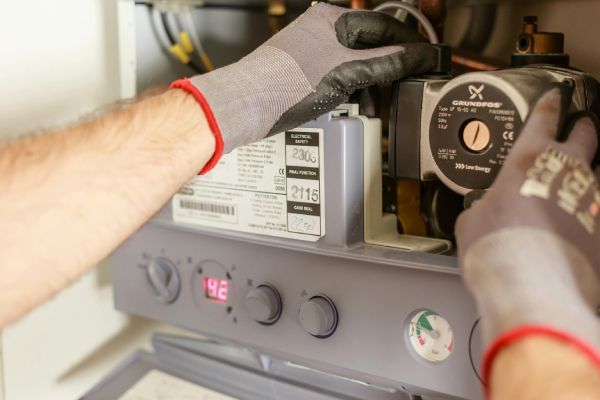
Consider where you are located and how long you will stay. For most Otago homes, using LPG makes more sense when existing connections are in place already and if you'll be staying for a long time. While a standard electric hot water cylinder may be the cheapest to buy, having a hot water pump is the cheapest to operate over the long term.
How you heat your water matters more to your bills than people expect. According to the EECA, hot water makes up about a third of an average household's energy bill. An energy-efficient hot water heat pump uses around a third of the energy of an electric resistance cylinder or gas water heating. An average household can actually save around $284 on a system estimated at $7,000 when installation costs are factored in.
A heat pump is only cost-effective if the math behind it works without sacrificing safety and efficiency. If it costs $3,000 more than electric cylinders of the same size, $284 a year takes over ten years to pay that back. It may not be favorable if you're planning to sell in five years.
Most NZ price guides point to the advantages of choosing gas over electric hot water systems since they are written for North Island residents whose homes are connected to natural gas pipes. In contrast, South Island homeowners have no natural gas network. Gas systems that run on LPG depend on bottle deliveries or a supply contract. This will add to running costs and household expenses.
Additionally, continuous flow LPG still suits homes where two showers often run at once. If you need to compare storage and on-demand systems, our guide to tank and tankless hot water systems can help.
It provides useful information before you decide. The same is true about our resource on gas versus electric water heating.
A heat pump water heater also needs space outdoors for its unit. It may also require a unit built in, so ask for one to be priced alongside a like-for-like swap.
Budgeting for a Rental, Motel or Light Commercial Site
Having a failing cylinder while running a business may cost you more in the long run because of the downtime it causes. The cheapest and least damaging route is always planning for a replacement before the tank eventually gives out.
A failed cylinder in a family home means cold showers for a day. In a motel with rooms booked or a block of flats with tenants ringing, it may mean lost income and a rushed decision at an after-hours rate. Thoughtful planning takes away unnecessary stress that can otherwise be avoided. Here are some things that you can do:
- Record the age of the cylinder. You can find the cylinder's install date on its label.
- Replace the oldest first. Begin with any older than 15 years or showing rust at the fittings.
- Book the work around your trading hours. This means schedule it during a quiet midweek morning rather than a full weekend.
- Price like-for-like and an upgrade together. The running cost difference is on paper so you can properly compare.
Commercial buildings add another layer. The current Building Code guidance requires stored water to be kept at no less than 60°C to control Legionella. Such is the case whatever the building type, and delivery temperature limits are even lower for places such as schools and hospitals.
If you own and manage a cafe, shop, or any small to medium-sized business, our
light commercial plumbing team can help plan replacements across your businesses. We're available 24/7 if a cylinder requires emergency work.
The Rules Every Cylinder Replacement Has to Meet
A new cylinder has to be installed by an authorised plumber. It must also keep stored water at 60°C or above while delivering water to showers and basins in a home at no more than 50°C.
Who is qualified to do it. Replacing a hot water cylinder in NZ is restricted plumbing work under the Plumbers, Gasfitters, and Drainlayers Act 2006, so it must be done by an appropriately authorised person. That means qualified plumbers holding a current practising licence, not registration alone. Gas connections need an authorised gasfitter.
Building consent. Under exemption 38 of Schedule 1 of the Building Act 2004, a building consent isn't needed for an authorised person to replace or reposition a water heater, provided every heat source is controlled. MBIE defines a controlled heat source as one with controls that keep the stored water no hotter than 90°C. The exemption doesn't apply where a heat source isn't controlled, such as a wetback connected to a solid-fuel heater or a solar thermosiphon system. In those cases, you need to secure consent from the Dunedin City Council before work starts.
Temperature. Stored water must be kept at no less than 60°C to prevent Legionella growth. Since the G12/AS1 amendment in November 2023, water delivered to personal hygiene fixtures in housing is limited to 50°C, down from 55°C. Tempering valves do that job.
Never turn a cylinder thermostat below 60°C to save on power bills. The health risk isn't worth the saving.
Hot Water Cylinder Maintenance That Adds Years
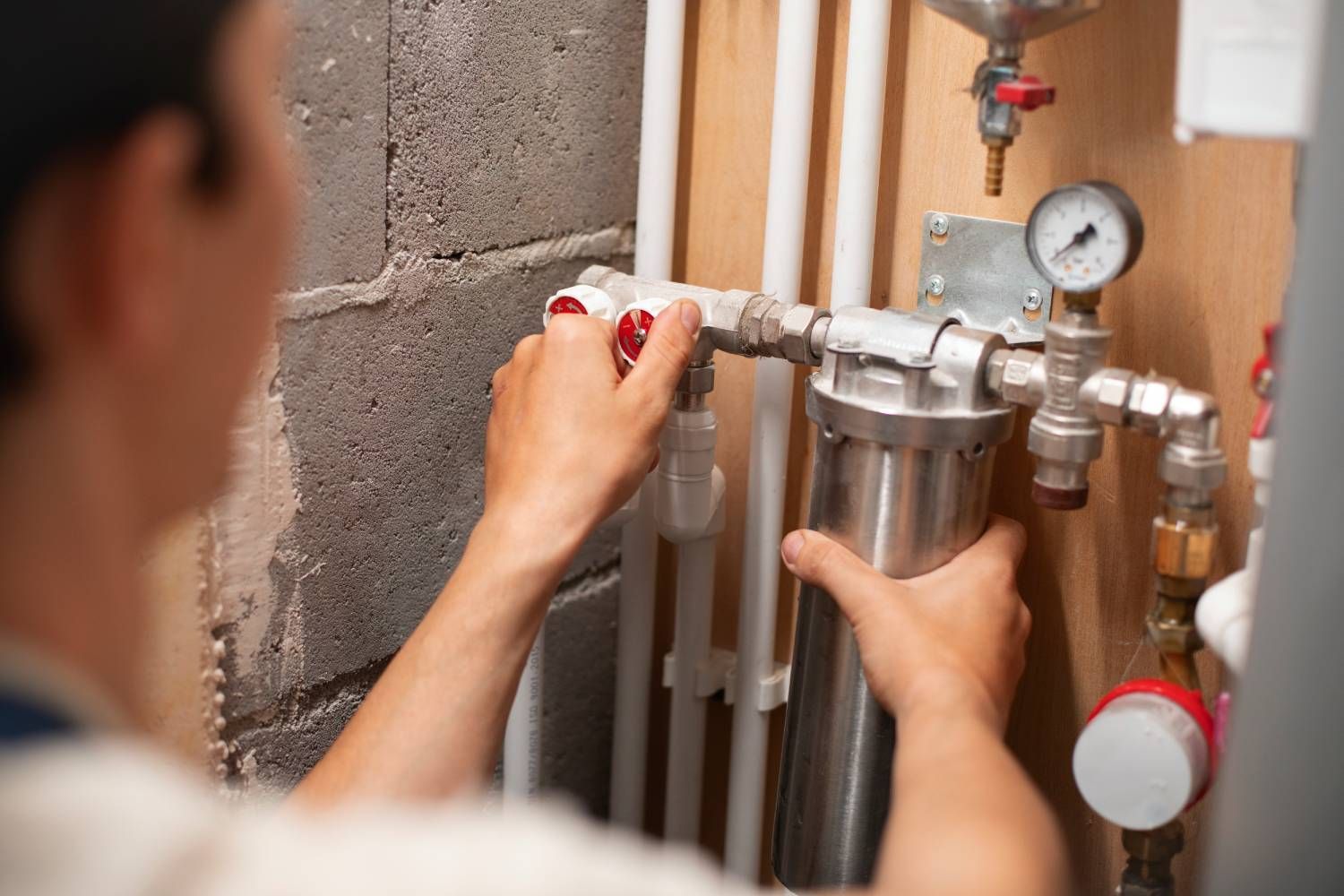
A cylinder lasts longest when small leaks get fixed early, and its valves are checked from time to time. Here are some things you can do to maximise the cylinder's lifespan.
- Inspect the cupboard floor or safe tray every now and then. If you find a damp area, then that is the first sign of a probable water leak.
- Take note of the valve. It may need immediate attention if the overflow pipe outside drips constantly.
- Leave the thermostat at 60°C or above.
- Ask for a quick valve check whenever a plumber is on site for other work.
The idea is to be proactive to catch a small repair job even before it worsens to become a replacement.
Frequently Asked Questions
Who fixes hot water cylinders?
Licensed plumbers fix hot water cylinders. Plumbing work on a cylinder, including valves, is restricted work that needs an authorised person. A gas cylinder also needs an authorised gasfitter, and electrical faults may need an electrician. Mains Plumbers repairs and replaces cylinders across Dunedin, Mosgiel and out to Palmerston and Milton.
How much to replace a hot water cylinder?
Expect around $1,600 to $5,500 for a standard replacement. Around $7,000 for a hot water heat pump. The final amount depends on cylinder type and size, access, any pressure upgrade, and whether GST is included in the quote.
Can I replace a hot water cylinder myself?
No. Replacing a cylinder is restricted plumbing work, and the building consent exemption for water heaters only applies when an authorised person does the job. You can safely switch off the power and close the cold water valve while you wait.
Do plumbers fix hot water cylinders?
Yes. Plumbers repair elements, thermostats, valves and small leaks at fittings. They can also replace the whole cylinder when the tank itself has failed. If yours is over 15 years old or leaking from the tank body, a replacement is usually the better use of your money.
Get a Straight Answer Before You Buy
Done right, a cylinder is a purchase you could be living with for the next 15 to 20 years. Tell us how old yours is and what it's doing, and we'll tell you whether it's a repair or a replacement and what it's likely to cost. Cold showers are bad enough without guessing what the fix will cost.
Call 03 488 6000 or send us a message. We'll provide you with a clear answer on your hot water cylinder options and a fair quote before any work starts.
References
BRANZ. (n.d.). Storage cylinders. Level. https://www.level.org.nz/energy/water-heating/storage-and-continuous-flow-systems/storage-cylinders/
Building Performance. (n.d.-a). 4.5 Replacement or repositioning of water heater connected to controlled heat source. Ministry of Business, Innovation and Employment. https://www.building.govt.nz/projects-and-consents/planning-a-successful-build/scope-and-design/check-if-you-need-consents/building-work-that-doesnt-need-a-building-consent/technical-requirements-for-exempt-building-work/4-plumbing-and-drainage/4-5-replacement-or-repositioning-water-heater-connected-controlled-heat-source
Building Performance. (n.d.-b). Preventing scalding from tap water. Ministry of Business, Innovation and Employment. https://www.building.govt.nz/building-code-compliance/g-services-and-facilities/g12-water-supplies/preventing-scalding-from-tap-water
Cylinder Direct. (n.d.). How much does it cost to replace a hot water cylinder? https://www.cylinderdirect.nz/blog/how-much-does-it-cost-to-replace-a-hot-water-cylinder
Gen Less. (n.d.). Hot water heat pumps: Efficient water heating. Energy Efficiency and Conservation Authority. https://www.genless.govt.nz/for-everyone/at-home/energy-saving-appliances/choose-good-appliances/hot-water-heat-pumps/
Grace Plumbing. (2026, August 14). Hot water cylinder replacement costs in Auckland 2026. https://graceplumbing.co.nz/hot-water-cylinder-replacement-costs-in-auckland-2026/
Ka Pai Plumbing. (2026, January 23). Hot water cylinder replacement cost in NZ: What to expect. https://www.kapaiplumbing.co.nz/plumbing-resources/hot-water-cylinder-replacement-cost-in-nz-what-to-expect
Regency Plumbing Services. (n.d.). Replacement Rheem 180L mains pressure hot water cylinder. https://regencyplumbing.co.nz/services/deals/rheem-collection/replacement-rheem-180l-mains-pressure-hot-water-cylinder-special-offer/
Te Waihanga New Zealand Infrastructure Commission. (n.d.). Gas: Sector summary. https://tewaihanga.govt.nz/national-infrastructure-plan-online/sector-summaries/gas
Recent Blog Posts